

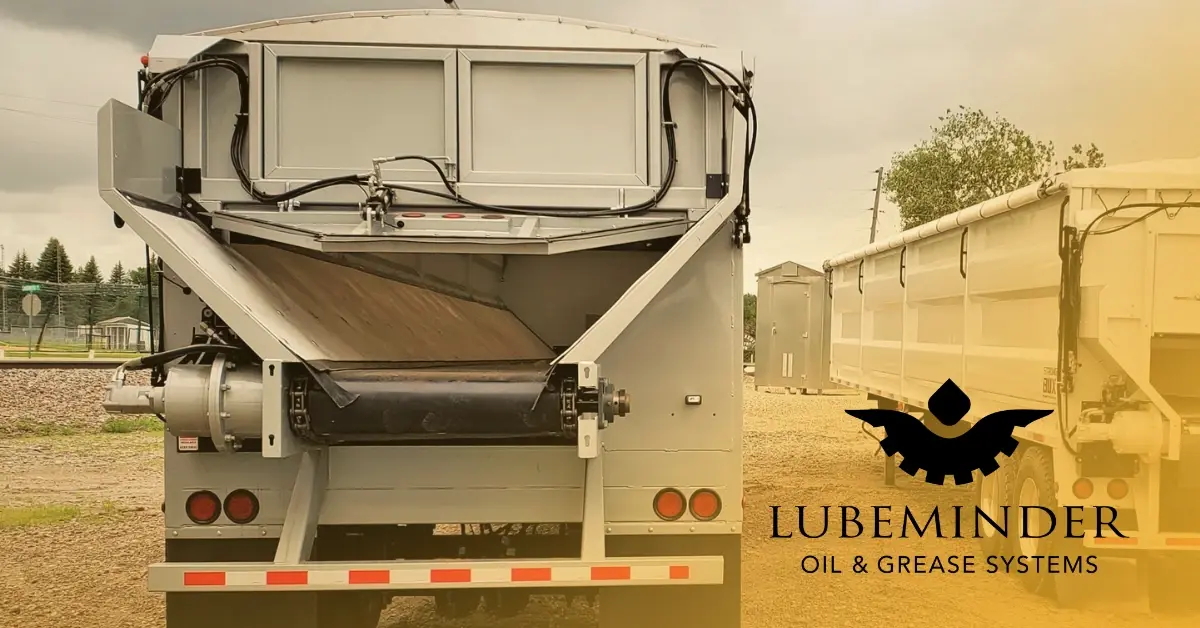
Live bottom trailers are complex machines with moving chains, gears, and pivot points. They operate in harsh environments, exposed to dirt, dust, manure, salt, and other contaminants. Without proper maintenance and lubrication, rust can form quickly, causing seized chains, grinding components, and costly conveyor replacements.
If you are looking to avoid costly repairs, or a complete trailer replacement, read ahead.
In this article, we will cover:
- Why live bottom trailers rust
- What happens when the conveyor isn't lubricated
- How to lubricate a live bed trailer
- Live bottom trailer maintenance checklist
- Advantages of automatic lubrication
Why Live Bottom Trailer Conveyors Rust
A live bottom trailer is comprised of a variety of gears, chains, pivot points, and belts that help it move efficiently while picking up and dropping off loads throughout the day. The following are the most common causes of rust on a live bottom trailer conveyor:
Moisture and Debris Buildup
Due to live bottom trailers running in most weather conditions, water can coat gears, and foliage can stick to the wet components, causing buildup over time and eventually, rust.
Road Salt Exposure
Just like how road salt rusts your car, it can rust a bottom live trailer's conveyor belt. Road salt can get into the vehicle's components while hauling material on the road. Even in the field, they're not safe from road salt; when water melts, the salt runoff can get into the field and onto your fleet while they're at work.
Metal-on-Metal Wear
Regular metal-on-metal wear results in conveyor components wearing down, exposing and making them more susceptible to rust when exposed to elements.
What Happens When the Conveyor Isn't Lubricated
Lubrication on conveyor components is the protective barrier against buildup, metal-on-metal wear, and potential road salt. When a conveyor isn't lubricated it can cause:
- Rust to form on chains and gears from weather- and water- related exposure if being used outdoors.
- Increased friction from the heat of components moving while the conveyor is unloading material.
- Grinding and premature wear from components grinding against each other while the live bottom trailer is in use.
- High costs and repairs, even a full conveyor replacement if it's not properly lubricated.
Without proper lubrication, downtime and costs increase significantly with component replacements and hefty repairs from rust, friction, and grinding. This is why having a reliable lubrication system integrated onto your live bed trailer is vital to its long-term performance, protecting your investment.
Why Lubrication Prevents Rust
A layer of lubrication is the first line of defense for the conveyor of a live bed trailer. Lubricant forms a protective film that reduces friction and displaces moisture, preventing rust whether the conveyor is in use or idle. The water is displaced by beading up and running off the conveyor components, preventing the rust's ability to form. Just like the moisture rolling off, the lubrication prevents contaminants from sticking to vital chains, gears, and sprockets due to glide and viscosity.
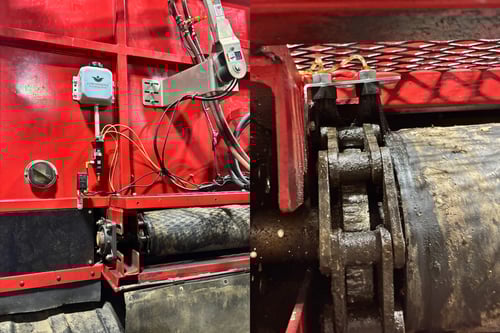 An oiling system installed on a live bottom trailer, with brushes lubricating chains.
How to Lubricate a Live Bottom Trailer Conveyor
Lubricating a live bottom trailer conveyor isn’t complicated—but it is easy to get wrong. Miss a step, skip a week, or use the wrong product, and you’re looking at accelerated wear, rust, and eventually full conveyor replacement.
Here’s how to do it properly:
1. Clean the Conveyor First
Lubricant should never be applied over dirt and debris.
Before anything else:
- Remove built-up material from the chain and slats
- Clear out sand, gravel, or product residue
- Rinse if needed, especially after hauling corrosive materials
Applying lubricant on a dirty conveyor traps contaminants and turns your system into a grinding surface.
2. Use the Right Lubricant
Not all lubricants are created equal, especially for this application. You’ll want something that:
- Penetrates chain links
- Resists water washout
- Provides corrosion protection
Avoid light oils that disappear quickly or heavy greases that collect debris and restrict movement.
3. Apply to All Moving Components
Focus on the areas that experience friction:
- Chain links and pins
- Sprockets
- Wear surfaces and rails (if accessible)
The goal is to get lubricant into the moving joints, not just coat the surface.
4. Apply Evenly (and lightly)
Over-lubricating causes just as many problems as under-lubricating.
- Use a consistent, light coating
- Avoid pooling or dripping
- Ensure coverage across the full length of the conveyor
Too much lubricant attracts dirt and speeds up wear.
5. Cycle the Conveyor
After application, run the conveyor briefly to:
- Distribute lubricant evenly
- Work it into chain joints and contact points
This step ensures you’re getting protection where it matters.
6. Repeat Consistently
This is where most operators fall short. Missed intervals are the #1 reason conveyors rust out prematurely.
Depending on usage and environment, lubrication should happen:
- Frequently in high-use or harsh conditions
- After washdowns or exposure to moisture
- Before storage to prevent corrosion
Live bottom trailer conveyors operate in some of the harshest conditions: moisture, debris, and constant load. Without consistent lubrication, friction increases, components wear faster, and rust takes hold.
And once corrosion sets in, repair costs escalate quickly. That’s why lubrication isn’t just a task; it’s a critical part of your overall maintenance routine.
Quick Live Bed Trailer Maintenance Checklist
Next to keeping components properly lubricated with oil or grease, it's important to complete regular maintenance on a live bottom trailer to ensure your investment lasts.
Your maintenance schedule is dependent on how often your fleet is operating, and what materials its hauling. These are the most important servicing tasks to complete:
- Inspect conveyor chains weekly for rust, abnormal wear, and large contaminants that could interrupt operation or cause damage.
- Remove debris build up from components such as chains, gears, and the interior of the live bottom trailer. This reduces material accumulation and minimizes the risk of cross-contamination, especially when hauling produce or other sensitive products. Typically, the trailer bed is cleaned with a high‑pressure water sprayer, while smaller components and pivot points are wiped down with rags.
- Lubricate chains and sprockets on a regular basis to keep components running smoothly and to reduce the number of debris and contaminants that stick to them. Conveyor lubrication can be performed manually or through an automatic lubrication system to improve consistency and reduce labor.
- Inspect for rust spots and, when identified, develop a corrective plan to repair or replace affected parts. Addressing corrosion early helps prevent unexpected failures and unplanned downtime.
- Confirm that lubricant is reaching all pivot points, either by applying it manually or by using an automatic lubrication system designed to lubricate these points while the conveyor is operating.
To ensure all critical points in the conveyor system receive consistent lubrication, consider implementing an automatic lubrication system. Integrating this type of system on your equipment can significantly reduce maintenance time, lower the likelihood of breakdowns when paired with a weekly inspection schedule, and increase daily throughput.
Why Automatic Lubrication Systems Make a Difference
Manual lubrication can be effective, but only when it’s done consistently and correctly.
Maintenance schedules get busy, lubrication gets missed, and critical components don’t always get the coverage they need. Over time, that inconsistency leads to rust, increased wear, and unexpected downtime.
Automatic lubrication systems solve this by delivering the right amount of lubricant, at the right time, without relying on manual intervention.
Top 3 Benefits of Automatic Lubrication Systems
Consistent Lubrication
Automatic systems apply lubricant at set intervals, ensuring components are continuously protected. It also:
- Reduces the risk of missed maintenance
- Helps prevent rust and corrosion
- Keeps chains and sprockets properly always lubricated
Better Coverage of Critical Components
Manual lubrication often misses hard-to-reach or internal moving parts. Automatic systems:
- Deliver lubricant directly to key wear points
- Reach into chain links and pivot areas
- Provide more even distribution across the system
Reduced Maintenance Time and Costs
Routine manual lubrication takes time - and when it’s skipped, costs add up quickly. With an automatic system:
- Less time is spent on maintenance tasks
- Equipment experiences fewer breakdowns
- Component life is extended
A More Reliable Way to Protect Your Conveyor
Instead of relying on manual schedules, automatic lubrication ensures your system is consistently protected, helping reduce wear, prevent rust, and keep your equipment operating efficiently.
Protect Your Equipment with LubeMinder
The LubeMinder automatic lubrication system is designed to keep critical components of your live bottom trailer conveyor properly lubricated without the need for constant manual maintenance.
It delivers lubricant directly to key wear points, helping:
- Reduce friction and component wear
- Prevent rust caused by moisture and contaminants
- Improve overall system reliability
If you're ready to protect your live bottom trailer fleet's chains, gears, and components from regular wear, talk to our team about our automatic lubrication system options - we can help figure out what will work for you:
