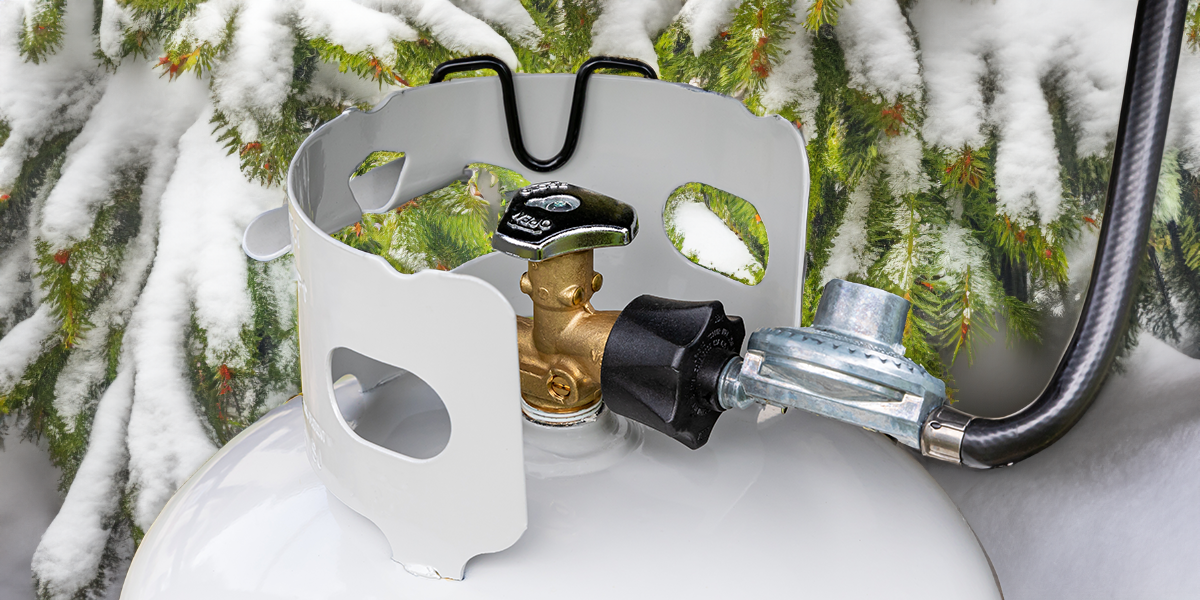
Propane tanks are a godsend when you need to warm up an icehouse in the winter or keep a camper toasty. That doesn’t mean the tanks themselves are immune to the elements.
Because the regulator controls the flow of propane from the tank to the application it's going to, you can trace much of your tank’s performance back to the way you maintain its propane regulator throughout the year. If a regulator leaks or sits out in icy-cold weather, it’ll be more likely to malfunction or freeze.
Rather than put a pin on your plans, let’s cover a few products you can use to avoid your propane regulator freezing during the cold season.
Let's talk about propane regulators and how to ensure they're ready to go in the cold:
- How does a propane regulator freeze?
- How do you warm a propane regulator?
- No more freeze with a propane tank warmer
How does a propane regulator freeze?
The good news is that, unless you’re ice fishing on Pluto, you don’t need to worry about the propane itself – it has a freezing point of -306.4°F.
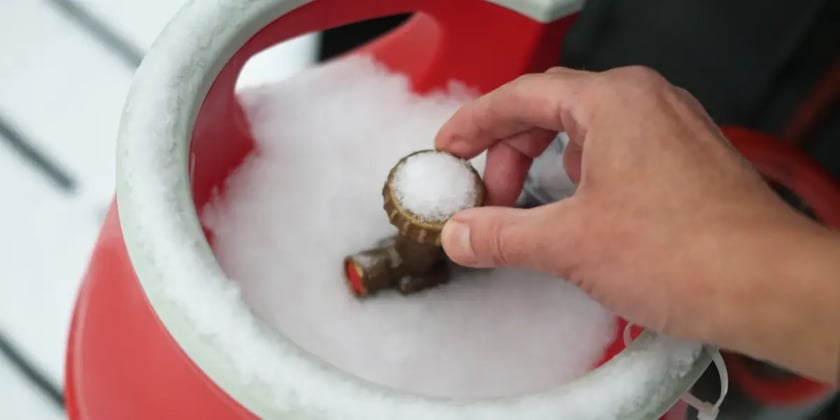
However, when a propane tank regulator sits outside in winter, it has no built-in defense against cold weather. And subfreezing temperatures can keep the propane from vaporizing properly. When unprotected, the regulator can freeze up quickly - and can take a long time to thaw. This can interrupt any plans of using the tank.
Propane regulators can also freeze if your tank is overfilled and the fuel floods into the regulator. This pressure change is a problem – in cold weather, it causes propane to freeze inside the regulator.
It’s also notable that propane contracts as temperatures drop, reducing the pressure inside the storage tank. Low pressure can prevent the gas from flowing properly through the equipment.
The only way to get a frozen propane tank up and burning again is by thawing the regulator.
How do you warm a propane regulator?
There are a few different methods you can use to prevent a propane regulator from freezing. From good to better to best, here’s how to keep the temperature up in the winter:
Good - Heating pouches
A true DIY way to warm a regulator is by taping heating pouches (usually disposable ones) around the regulator. This adds localized heat and helps melt light frost.
The issue with this method is that hand warmers and chemical heat packs last for as little as 2 hours. They aren't exactly efficient at retaining heat on their own, either.
Better - Standard Heated blanket
Another way to get a regulator working again is by wrapping an electric heating blanket around it, just like you’d use in the recliner at home. A blanket offers more consistent coverage than slapping on a few heat packets.
This method also takes a few hours to sufficiently warm the regulator, so the tanks are safe to run. Part of the reason is a lack of insulation in most of these products. You’re also out of luck if you don’t have a 120V power source.
Best - Propane Tank Warmer
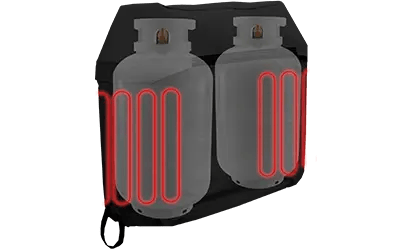
A propane tank warmer features insulation and heating elements to warm the regulator and trap heat inside. As long as you plug the cover into an outlet and fit it snugly onto the propane tanks, the regulator will be ready to run.
These products are your go-to if you have daylong plans in place:
- Camping
- Hunting
- Ice fishing
- Winter travel
No More Freeze with a Propane Tank Warmer


Any tank warmer design should account for every possible weather hazard. Python’s three design options are built to withstand freezing temps, keeping your propane tank regulators warm and ready to run. Snowfall, sleet, rain, and strong winter gusts cannot penetrate this cover.
The warmer is designed for dual, 30 lb. propane tanks. The heating element wraps around the entire cover, and a flip cover further insulates the tanks. The warmer regulates the temperature of the propane to ensure both vessels are burning at maximum efficiency.
Heat In, Cold Out
Nasty weather can do nasty things to a heat source.
In the case of a propane tank, there are several solutions available based on your desired level of protection. If you want your heat source to be usable for several hours at a time, choose a propane tank warmer. It’s the best way to keep the heat in and the cold out.
To learn more about available designs for propane tank warmers, click below:
