

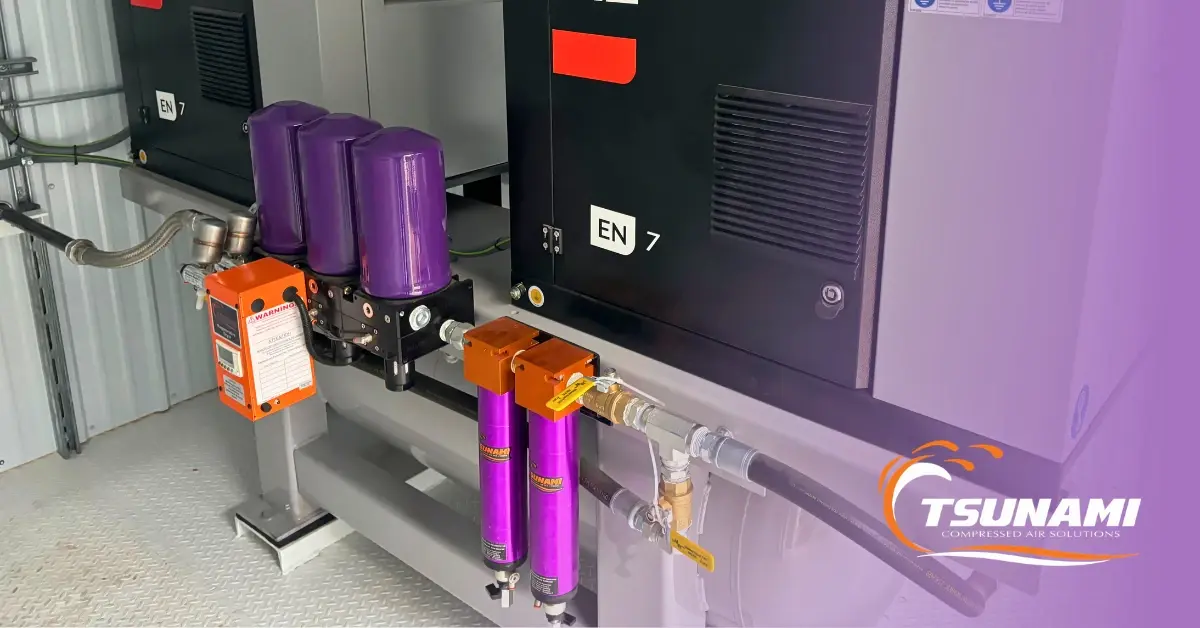
Air dryers can be noisy, but how much noise is too much?
There are three key ways to evaluate what you’re hearing.
- First, keep in mind that some noise is normal. Air dryers often make sounds during purge cycles, so occasional bursts aren’t necessarily a problem.
- Second, consider your muffler. Does your system have one, and is it functioning properly? Air dryer mufflers help reduce unnecessary noise while maintaining your dryer’s performance.
- Third, the noise could signal a larger issue, like a leak or broken valve.
Once you identify the cause, you can choose the right approach for troubleshooting. In this article, we’ll break down what’s normal, what’s not, and when mufflers might be the solution.
Why Do Air Dryers Make Noise In the First Place?
An air dryer goes through a purge cycle periodically as it’s running. It’s basically your system’s way of cleaning the desiccant cartridge out. As your compressor runs, moisture, oil, and dirt build up inside the dryer.
Your system’s sudden release of air pushes this buildup out during the purge cycle every time the compressor finishes building pressure. This burst of air creates a sharp, loud hissing sound, similar to compressed air discharge. The quick “pop” every few minutes is completely normal, and exactly what your air dryer should sound like.
This purge cycle is vital in the operation. Without it, the filter gets overloaded, and moisture can end up traveling through your system, causing malfunctions down the road.
Watch: What Your Compressed Air Dryer Should Sound Like
Normal Dryer Sounds vs Warning Signs
A sudden burst of sound is expected as your air dryer runs through its cycles. But if you hear a constant hissing, that’s a red flag. It could mean something is leaking or isn’t working properly. The chart below can help you decide what’s normal and what action (if any) you should take.
| Normal Sounds | Sounds Indicating a Problem |
|
|
Quick Diagnostic Questions for Operators
When a desiccant air dryer starts its purge cycle and releases the built-up air, the sudden release can be pretty loud. It should only last a moment, and after the initial burst, the rest of the process should be much quieter.
As you're assessing the air dryer, there are key diagnostic questions to ask the operator to help make a plan.
Question 1: Does the sound only occur during regeneration?
Short bursts of noise are normal, typically every 3 to 5 minutes, during the tower changeover. But if the sound is constant, it could mean the purge valve isn’t working properly.
Question 2: Is the release of air louder than usual?
If yes, something in the system may be wearing out, like a muffler or valve, or the system pressure might even be off.
Question 3: Are there performance changes in the compressed air system?
Low pressure, moisture, or odd cycling times can all point to a bigger problem, such as failed check valves or damage to the desiccant bed.
/21999-0707%20Piston%20Replacement%20Kit%20for%20Regenerative%20Dryer_WEB.png?width=600&height=400&name=21999-0707%20Piston%20Replacement%20Kit%20for%20Regenerative%20Dryer_WEB.png)
How Air Dryer Mufflers Reduce Noise
Air dryer mufflers act as a bridge between the high-pressure dryer exhaust and the atmosphere. It helps reduce noise to a safer level and stops dirt or contaminants from being blown into the air.
The chart below breaks down, step by step, how a muffler helps industrial noise control as the air dryer goes through its cycle:
| Cycle Step | What's Happening |
| Exhaust air entry | When the system runs, the built-up moisture and contaminants get pushed out through an exhaust port, where the muffler is attached. |
| Air diffusion | Inside the muffler, the air passes through porous material, which breaks the airflow into smaller, softer streams instead of one strong blast. |
| Sound reduction | The porous material also helps absorb and quiet the sound. |
| Air exit | The air leaves the muffler, but now with much less noise than before. |
Air Dryer Benefits for Your Shop
Adding a muffler to your air dryer offers many benefits to your shop. They help create an environment that’s more comfortable to work in and helps keep noise levels safer for everyone.
Here are some of the key benefits you can expect for your shop:
- Quieter workspace: Mufflers are designed to reduce the loud blast of air from dryers, making the shop a more pleasant place to be.
- Safer work environment: Less noise means less risk of hearing damage, easier communication, and a less stressful place to work.
- Improved system performance: Dry, clean air helps prevent moisture from getting into your equipment, which reduces rust, prevents tool issues, and helps your machine last longer.
- Helps meet noise guidelines: Mufflers help companies stay within workplace noise limits set by OSHA.
Your facility can gain all these benefits without much effort. Air dryer mufflers are easy to install, and integration into your existing setup doesn’t require major changes.
When Your Air Dryer Needs a Muffler
Mufflers help air dryers run more efficiently, reduce noise, and meet safety regulations. There are some key situations when you should consider adding a muffler to your air dryer.
- High-volume exhaust: If the desiccant regeneration process is creating a loud blast of noise every few minutes, a muffler will help soften the noise.
- Enclosed shop areas: When air dryers don’t have breathing room, the noise is amplified, especially when it can bounce off the walls. A muffler reduces the concentration of noise.
- Noise complaints: If workers or neighbors complain about the machine shop noise, installing a muffler is a quick and effective way to make both sides happier.
- Older systems: Many older systems don’t have adequate noise control built in, making them extra loud. Mufflers are an easy addition to the existing system.
- Worker disturbance: Constant loud noise creates an unsafe working environment for your employees. The addition of a muffler to the air dryer is an easy way to improve the worker experience.
Bottom Line: Alarm or Muffler?
When assessing your air dryer muffler, keep in mind that noise made during the purge cycle is normal. Unusual sounds could be pointing to a bigger issue and indicate maintenance needs.
But excessive noise could simply mean you need a proper muffler on your machine. These provide a simple solution for controlling noise without affecting performance or production.
If you’re looking for practical solutions to mitigate the noise in your shop, explore our air dryer parts and accessories.
Ready to have a quieter shop?
