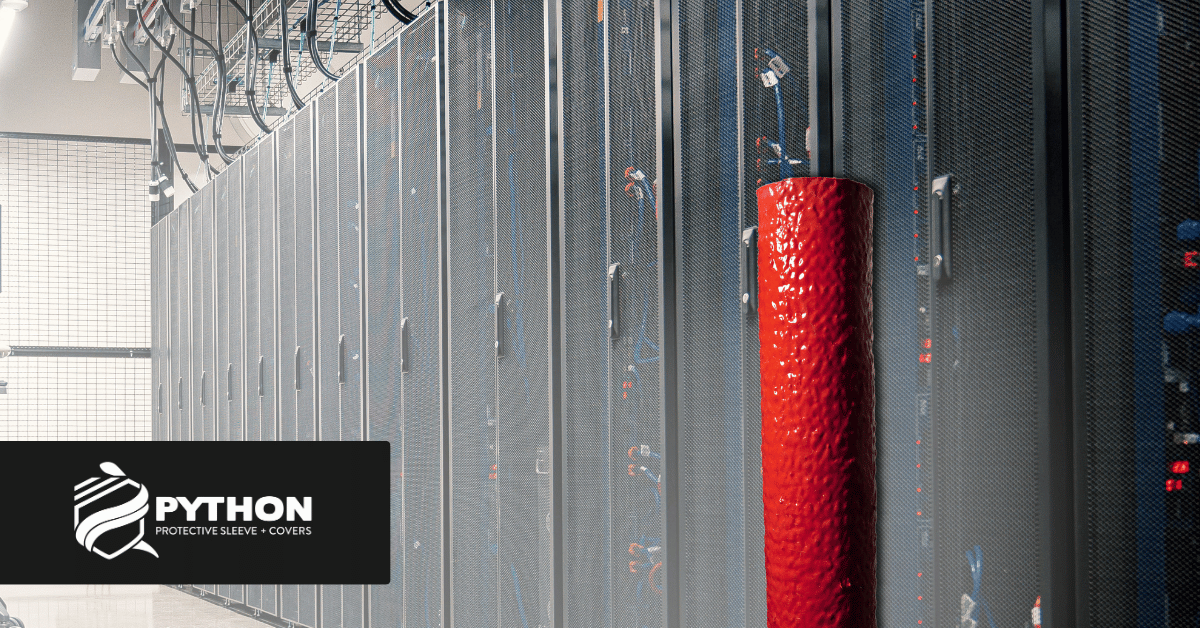
In the past 3 years, the term “data center” has been everywhere. But little is said about the behind-the-scenes work of maintaining them.
The rapid growth of AI, cloud computing, and hyperscale data centers has increased demands on cooling infrastructure. While servers receive much of the attention, the supporting mechanical systems are equally critical. Hoses, pipes, and other components play a key role in maintaining data center temperature by transporting cooling fluids and absorbing equipment vibration.
Industrial textiles help protect these vital data center systems, extending equipment life and reducing overall maintenance. Below, we’ll cover why the physical side of data center maintenance matters, how industrial textiles support it, and which solutions are available.
Data Center Maintenance Starts with Reliable Cooling Infrastructure
A data center’s cooling system is essential to preventing overheating, equipment failure, and unexpected shutdowns. Because the system relies on several components working together, regular maintenance is necessary. Key components include:
- Cooling water lines: Carry water to and from equipment
- Pumps: Keep water moving through the system
- Valves: Control fluid flow and pressure
- HVAC equipment: Regulate overall room temperature
- Heat exchangers: Remove heat from the cooling liquid to keep the system at a safe temperature
Proactive maintenance helps prevent serious mechanical failures and unplanned downtime. Protecting the cooling system and its components supports consistent performance and reliable data center operations.
How High-Performance Textiles Protect Cooling Systems
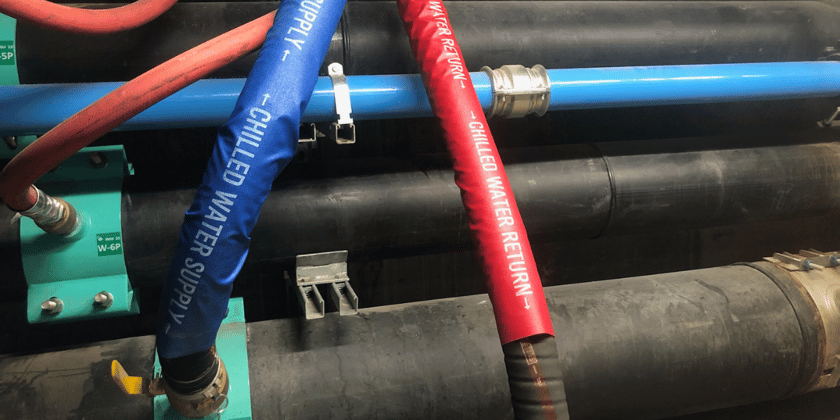
Cooling systems rely on an extensive network of equipment to circulate cooling water. These lines often run through tight mechanical spaces, which can cause wear and tear that impact performance.
Without proper protection, hose damage can lead to leaks, unplanned maintenance, and costly downtime. Engineered textiles are designed to withstand these demanding industrial environments.
Common exposures include:
- Abrasion and constant vibration: Contact with steel framing, equipment edges, and ongoing movement can wear down hoses over time.
- High temperatures: Heat from nearby machinery can damage hoses or affect their performance.
- General mechanical wear: Daily use and friction can gradually weaken hoses and increase the risk of leaks or failure.
Proper protection extends the service life of the cooling infrastructure, reduces maintenance needs, and creates a more reliable data center operation.
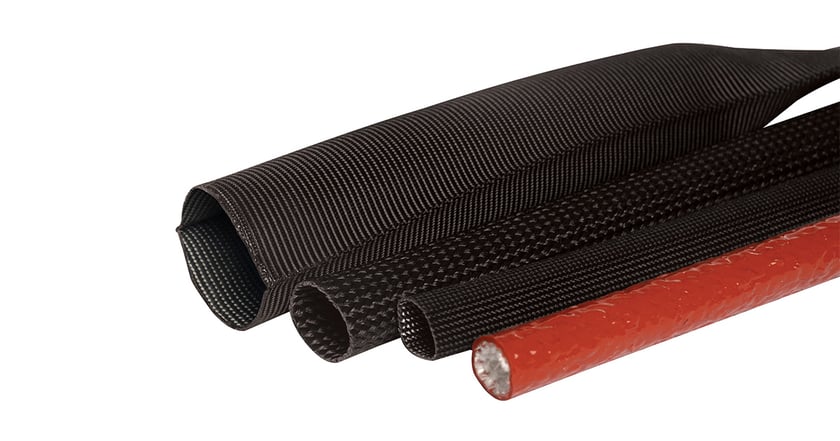
Best practices to take to prevent mechanical wear over time:
- Wrap sleeves: Made of nylon, these sleeves are designed to prevent tearing, abrasion, and irregular temperatures the hose may experience. The wrap design allows for it to be placed on multiple sizes of hoses, wires, and cords.
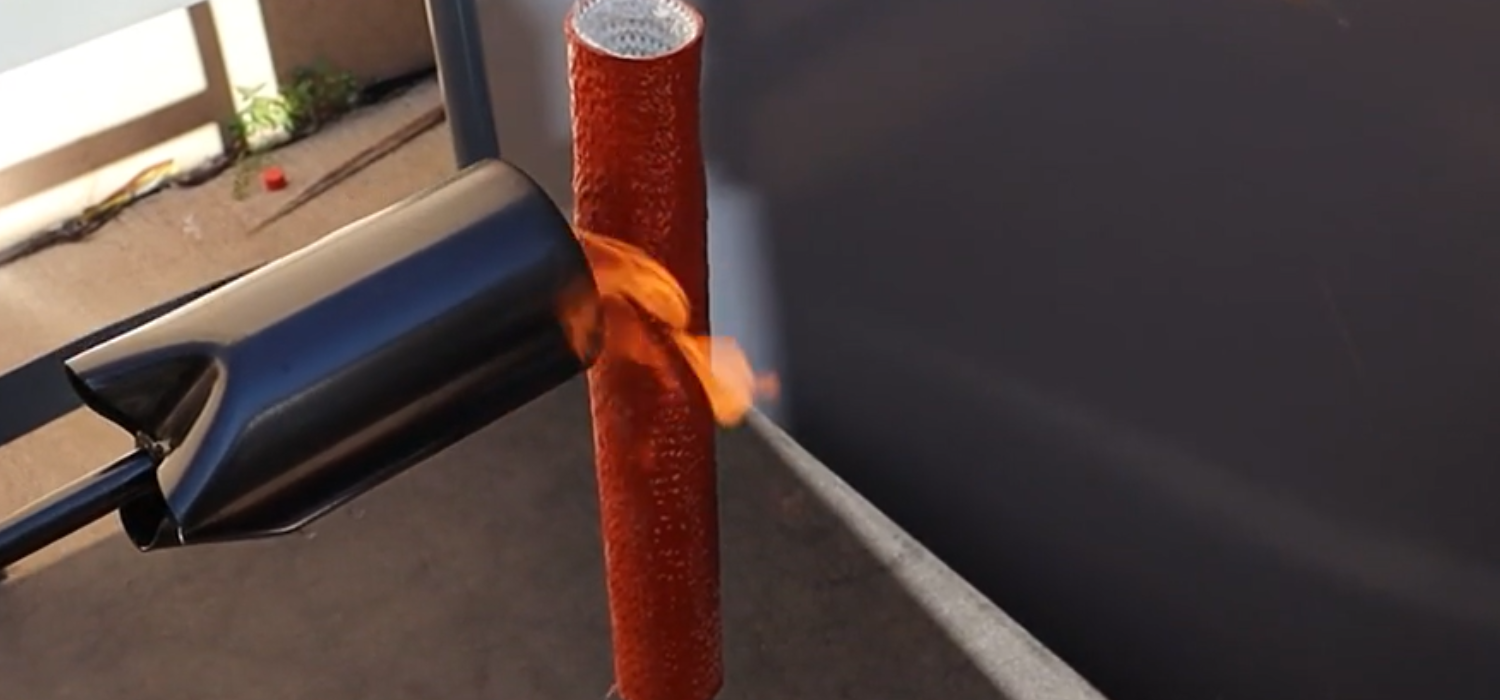
- Tubular sleeves: Sleeves for hoses, wires, and cords that offer protection against high temperatures and bursts from abrasion.
- Bundling straps: Used to reduce hazards by cinching connective components in place and keeping them out of the way of other equipment. These cable management solutions are specially designed to withstand tough environments.
Industrial Textile Applications Beyond Hose Protection
While cooling water lines are a key application, industrial textiles support many other aspects of reducing unplanned data center maintenance.
Industrial textiles also help protect critical infrastructure, improve safety, and simplify maintenance throughout the facility. Common features include resistance to abrasion, chemicals, punctures, sparks, and UV exposure, along with flexibility, moisture protection, and temperature control.
The table below provides common industrial textile applications used for proactive maintenance in industrial facilities such as data centers.
Custom Industrial Fabric Solutions Compatible for Every Data Center
Like most industrial spaces, every data center has unique requirements, including equipment layouts, hose routing, temperature requirements, and maintenance schedules. Partnering with an original equipment manufacturer (OEM) allows you to develop integrated protective solutions tailored to your facility, helping improve equipment reliability and simplify maintenance.
When you partner with a manufacturer for a custom solution, its engineering team works to understand your challenge and design a product that meets your needs. Industrial textiles offer a wide range of design possibilities, making it easier to create a solution for your specific application.
Once a design is finalized, you can choose from a variety of materials available, such as polyester and nylon, each offering different protective properties. Depending on the environment, options may include fire, abrasion, chemical, or temperature resistance.
Industrial Textiles Keep Data Centers Running
It's clear that reliable data center maintenance depends on more than just managing servers and software. Protecting the cooling infrastructure helps prevent unexpected shutdowns while supporting equipment reliability and operational efficiency.
High-performance industrial textiles offer a practical way to support data center maintenance by extending the service life of hoses, cooling lines, and other critical mechanical components.
Want to learn more about the types of industrial textiles relevant to your data farm? Explore our Guide to Custom Textile Manufacturing to discover different types of industrial textiles, their unique properties, and how to choose the right solution for your application.
